

Table of Contents
The phrase games ProgramGeeks has started appearing in searches related to gaming, programming, technology education, and interactive digital experiences. Some people use the term while looking for online games. Others are interested in game development tutorials, coding challenges, gaming news, or technical resources connected with the ProgramGeeks website.
This overlap can make the topic confusing. Is it a gaming service, a development platform, an educational resource, or simply a section of a technology publication?
The most accurate way to understand it is to view games ProgramGeeks as part of a broader technology-content ecosystem. The ProgramGeeks website publishes material across gaming, software, social media, hosting, and technology-related subjects. Its homepage specifically features gaming-focused topics, including game development and gaming experiences. (Programgeeks)
This guide explains what the term means, what users may expect to find, how gaming and coding connect, and how readers can judge the reliability of online gaming information. It also explores the skills, tools, technologies, and career opportunities associated with modern game creation.
What Is Games ProgramGeeks?
Games ProgramGeeks is a search phrase associated with gaming and game-development content connected to the ProgramGeeks name. Rather than referring clearly to one downloadable game, console, or established game store, the phrase appears to cover several related interests.
A visitor may be searching for information about video games, coding-based games, game programming tutorials, development tools, gaming trends, or technical explanations. ProgramGeeks presents itself primarily as a technology-focused content website, with gaming included among its subject areas.
That distinction is important. A content hub usually explains, reviews, or discusses games and software. A dedicated gaming platform normally allows visitors to launch, download, purchase, or manage games directly. Readers should therefore examine the exact page they open instead of assuming every result offers playable games.
The popularity of the phrase also reflects a larger trend. Gaming is no longer separated from programming, artificial intelligence, design, cloud hosting, online communities, and digital education. Today, a single gaming topic can involve all of these areas at once.
Understanding the Search Intent Behind Games ProgramGeeks
People searching for games ProgramGeeks do not always have the same objective. The keyword combines a broad activity with a specific brand-like term, producing mixed search intent.
Some visitors have informational intent. They want to know what ProgramGeeks says about gaming or whether the website provides useful game-development guidance. Others have navigational intent and are trying to reach a particular page they have seen before.
A smaller group may have transactional intent. These users may be looking for a game download, software tool, course, membership, or gaming-related service. Because the phrase does not automatically identify a product, users should confirm where a page leads before downloading anything or entering payment details.
| Search intent | What the user may want | Best next action |
| Informational | Gaming guides, explanations, or development knowledge | Read the full article and verify technical claims |
| Navigational | A particular ProgramGeeks gaming page | Use the website’s search or category navigation |
| Educational | Coding challenges or game-programming guidance | Check whether tutorials include examples and prerequisites |
| Transactional | Games, software, tools, or paid resources | Confirm the publisher, price, license, and refund terms |
| Safety-focused | Information about whether a game or download is secure | Verify the official source and scan files before installation |
Understanding this intent helps content creators provide more useful answers. It also protects users from landing on unrelated pages that repeat the keyword without genuinely addressing the topic.
How Games ProgramGeeks Connects Gaming and Technology
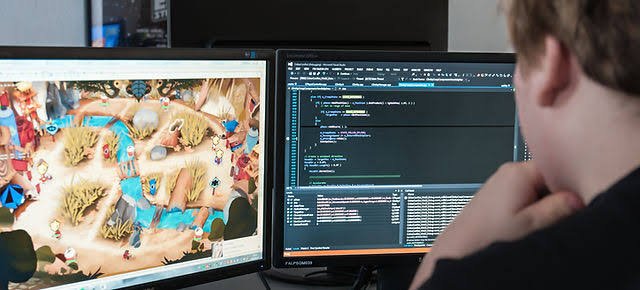
The most valuable way to interpret games ProgramGeeks is through the relationship between games and technology. Every digital game is built on a collection of technical systems working together.
A game may include a rendering engine, physics calculations, sound processing, user-interface logic, input controls, artificial intelligence, network communication, data storage, and security features. Even a visually simple mobile game can contain thousands of lines of code.
This is why gaming content is naturally relevant to programmers and technology enthusiasts. Players see the final experience, while developers think about the systems underneath it. Movement, scoring, collisions, character behavior, menus, achievements, and multiplayer matchmaking all depend on programmed rules.
Game-related technology content can help readers move from passive consumption to active understanding. Instead of only asking whether a game is entertaining, they begin asking how its mechanics work, how its performance is optimized, and why certain design choices influence player behavior.
That technical curiosity is often the first step toward learning development.
The Role of Programming in Modern Games
Programming gives a game its behavior. Artists may create the characters and environments, but code determines how those elements react when a player takes an action.
In the context of games ProgramGeeks, programming may cover beginner-friendly subjects such as variables, conditions, loops, functions, and events. At a more advanced level, it can include rendering pipelines, memory management, procedural generation, pathfinding, networking, and artificial intelligence.
Game programmers commonly work with languages such as C++, C#, JavaScript, Python, Java, Lua, and GDScript. The best language depends on the engine, platform, genre, and performance requirements.
| Programming language | Common gaming use | Typical learning difficulty |
| C++ | High-performance engines and major PC or console games | Advanced |
| C# | Unity development and cross-platform projects | Beginner to intermediate |
| JavaScript | Browser games and interactive web experiences | Beginner-friendly |
| Python | Prototypes, educational games, tools, and automation | Beginner-friendly |
| Java | Android games and general application development | Intermediate |
| GDScript | Godot game projects and rapid prototyping | Beginner-friendly |
| Lua | Scripting, mods, embedded systems, and game logic | Beginner-friendly |
Programming is not only about writing commands. Developers must also break large problems into smaller systems. A character controller, for example, can be divided into movement, jumping, animation, collision detection, health, and input handling.
This structured thinking makes game programming valuable even for people who later work in software engineering, data science, web development, or automation.
Game Engines and Development Tools Explained

A game engine provides the technical foundation needed to build an interactive experience. It usually includes tools for graphics, physics, animation, sound, scripting, scene management, and exporting a project to different devices.
Readers exploring games ProgramGeeks may encounter discussions about Unity, Unreal Engine, Godot, GameMaker, or browser-based development frameworks. Each option serves a different type of developer.
Unity is widely associated with C# and cross-platform development. Unreal Engine is known for high-end graphics and supports C++ as well as visual scripting. Godot is open source and uses a flexible scene-based structure. GameMaker is often selected for accessible two-dimensional development.
Choosing an engine should depend on the project rather than popularity alone. A beginner creating a small puzzle game does not need the same production pipeline as a studio developing a realistic multiplayer world.
| Development tool | Strongest use case | Main advantage | Important consideration |
| Unity | Mobile, indie, 2D, and 3D games | Large ecosystem and broad platform support | Projects require careful optimization |
| Unreal Engine | Realistic 3D and high-end productions | Advanced rendering and visual scripting | Can feel complex for beginners |
| Godot | Indie projects and learning | Open-source and lightweight | Smaller commercial ecosystem |
| GameMaker | Two-dimensional games | Fast prototyping and accessible workflow | Less suitable for some complex 3D projects |
| Phaser | Browser-based games | JavaScript and web integration | Mainly focused on web experiences |
| Construct | No-code and low-code projects | Visual event system | Advanced customization can be limited |
The tool matters, but consistent practice matters more. A small completed project teaches more than an ambitious game that remains unfinished.
Why Coding Games Make Learning More Engaging
Coding games turn abstract programming concepts into visible results. A learner writes a command and immediately sees a character move, an object appear, or a score change.
That feedback loop makes technical learning feel less intimidating. Instead of reading definitions without context, the learner solves a practical problem. A loop can control repeated enemy movement. A condition can open a door after a key is collected. A variable can store the player’s health.
This interactive approach is one reason searches for games ProgramGeeks may overlap with coding education. Established programming-game platforms use puzzles, challenges, levels, and simulated environments to help learners practise coding. Examples across the wider industry include services that teach Python, JavaScript, algorithms, or general computational thinking through play. (Built In)
However, gamification does not remove the need for focused study. Points and achievements can support motivation, but learners still need to understand why their solution works. The strongest approach combines interactive challenges with documentation, experimentation, and independent projects.
Skills Readers Can Develop Through Games ProgramGeeks Content
The usefulness of games ProgramGeeks should not be measured only by entertainment. Gaming and development content can support several transferable abilities.
Problem-solving is one of the most obvious. Games constantly present goals, obstacles, systems, and limited resources. Development takes this further by requiring a person to predict how multiple rules will interact.
Logical thinking also improves. A programmer must understand what happens when a condition is true, false, delayed, interrupted, or repeated. Small errors can produce unexpected behavior, encouraging careful testing.
Creative skills are equally important. Game creation involves storytelling, visual communication, sound design, pacing, emotional tone, and world-building. Technical knowledge gives creators control, but creativity gives the project a reason to exist.
Collaboration is another major skill. Commercial games are usually made by teams containing developers, designers, artists, writers, animators, testers, producers, and audio specialists. Team members must explain problems clearly and respect the limitations of other disciplines.
Research into collaborative game-based programming also suggests that well-designed interactive environments can encourage engagement, critical thinking, creativity, and practical problem-solving. (arXiv)
Game Genres and Their Technical Requirements
Different genres create different development challenges. A racing game needs responsive controls and convincing vehicle behavior. A strategy title may require complex artificial intelligence and resource-management systems. A multiplayer shooter depends heavily on networking, synchronization, latency management, and anti-cheat protection.
Understanding genres makes games ProgramGeeks content more meaningful because it shows why there is no single formula for building a game.
| Game genre | Important systems | Common development challenge |
| Action | Combat, movement, animation, collision | Maintaining responsive controls |
| Role-playing | Inventory, quests, dialogue, progression | Managing large amounts of content |
| Strategy | Artificial intelligence, resources, pathfinding | Balancing complex systems |
| Puzzle | Rules, level logic, feedback | Creating difficulty without frustration |
| Racing | Vehicle physics, tracks, camera behavior | Combining realism with enjoyable handling |
| Simulation | Data models, artificial intelligence, economy | Making systems believable and manageable |
| Multiplayer | Networking, matchmaking, synchronization | Handling latency and unfair play |
| Educational | Learning objectives, assessment, rewards | Keeping instruction and entertainment balanced |
Genre also affects team size and production cost. A short browser puzzle can be made by one person, while a massive online world may require hundreds of specialists and years of development.
Beginners should start with a genre that has limited systems. A small two-dimensional puzzle or platform project is usually more manageable than an open-world multiplayer game.
Artificial Intelligence in Game Development
Artificial intelligence has been used in games for decades. Traditional game AI controls opponents, navigation, decision-making, difficulty, and non-player characters.
Modern generative systems have expanded the conversation. Developers can now use AI-assisted tools for brainstorming, placeholder dialogue, code suggestions, concept exploration, testing support, animation workflows, and procedural content.
For readers researching games ProgramGeeks, it is important to separate genuine game AI from exaggerated marketing. An enemy that follows the player may use a simple rule rather than machine learning. A character that selects from predefined actions can feel intelligent without using a large AI model.
Generative tools can speed up certain tasks, but their output still needs human review. Suggested code may contain errors. Generated artwork may create licensing or consistency concerns. Automated dialogue may not match the game’s tone.
AI works best as an assistant rather than an unquestioned replacement for design judgment. Developers remain responsible for originality, accuracy, performance, safety, and the final player experience.
Online Gaming, Communities, and Multiplayer Experiences
Gaming has become highly social. Players communicate through voice chat, live streams, forums, guilds, tournaments, and user-created content.
This community dimension may be part of the interest surrounding games ProgramGeeks. Readers are not always searching for a single title. They may want gaming discussions, technical communities, development updates, or shared learning opportunities.
Multiplayer systems create additional technical demands. The game must communicate with servers, validate actions, synchronize player positions, store accounts, manage matchmaking, and protect user data. Poor networking can cause lag, disconnections, or unfair outcomes.
Community management is just as important as engineering. Clear rules, reporting tools, moderation, privacy controls, and age-appropriate protections help make an online environment safer.
Players should be careful about sharing personal information in gaming communities. Usernames, profile details, voice conversations, and linked social accounts can reveal more than expected. Strong passwords and multifactor authentication provide useful protection where supported.
How to Evaluate the Reliability of Games ProgramGeeks Information
Not every gaming article is equally trustworthy. A useful games ProgramGeeks page should explain its subject clearly, distinguish facts from opinions, and avoid promises that cannot be verified.
Readers should examine whether an article identifies the game, developer, engine, operating system, version, or source being discussed. Vague statements are difficult to confirm.
Publication dates matter because games and software change frequently. A tutorial written for an old engine version may no longer work. A download guide may point to an outdated file. A review may describe features that were removed or redesigned.
External confirmation is also valuable. Technical information should match official documentation where possible. Prices should be checked through legitimate stores. System requirements should be confirmed through the developer or publisher.
Trust is especially important when a page encourages downloads. Users should avoid files from unknown mirrors, shortened links, or pages that imitate official stores. Legitimate gaming content should help readers make informed decisions rather than pressure them into immediate action.
Safety Considerations Before Downloading Games
A search for games ProgramGeeks may eventually lead users toward game files, modifications, launchers, emulators, or development tools. Downloads require additional caution.
The safest option is normally the official website, recognized application store, or verified publisher page. Third-party downloads may be legitimate, but they introduce uncertainty about whether the file has been changed.
Modified game files deserve particular attention. A mod can improve graphics, add content, or change mechanics, but an unofficial executable can also contain unwanted software. Users should check the reputation of the source, scan the file, read installation instructions, and back up important data.
Permissions provide another warning sign. A simple offline game should not require access to contacts, messages, or unrelated personal information. Mobile users should examine requested permissions before installation.
Children and younger players may need additional guidance regarding in-game purchases, chat features, advertising, and account privacy. Safe gaming is not only about malware. It also involves financial controls, healthy play habits, and responsible online interaction.
Performance and Hardware Requirements
Games vary greatly in their hardware demands. A browser puzzle may run on an entry-level laptop, while a visually advanced three-dimensional game may require a powerful graphics card, modern processor, sufficient memory, and fast storage.
Anyone using games ProgramGeeks to research a game should compare its minimum and recommended requirements. Minimum specifications usually indicate that the game can run, but not necessarily at a desirable frame rate or visual quality.
Resolution, graphics settings, background applications, cooling, drivers, and storage speed can all affect performance. A computer that meets the listed requirements may still struggle if it overheats or lacks available memory.
| Component | Role in gaming | Signs of a limitation |
| Processor | Handles game logic, simulation, and system tasks | Stuttering or slow simulation |
| Graphics card | Renders environments, effects, and animation | Low frame rate or reduced visual quality |
| Memory | Stores active game data | Freezing, crashes, or heavy disk usage |
| Storage | Loads game files and assets | Long loading times |
| Internet connection | Supports online communication | Lag, disconnections, or delayed input |
| Cooling system | Maintains safe operating temperatures | Performance dropping during long sessions |
Players should update drivers carefully and avoid downloading so-called performance boosters from unknown sources. Many optimization claims are exaggerated, and some tools can create new problems.
Career Opportunities Connected With Game Development
Interest in games ProgramGeeks can develop into a professional goal. The game industry contains far more roles than many beginners realize.
Programmers may specialize in gameplay, graphics, artificial intelligence, tools, engines, user interfaces, physics, or networking. Designers focus on mechanics, levels, progression, balance, and player experience. Artists create environments, characters, textures, effects, and interfaces.
Quality-assurance professionals test builds and document problems. Producers organize schedules, priorities, communication, and delivery. Writers create dialogue, narrative structures, character backgrounds, and world details. Audio specialists develop music, sound effects, and voice-production systems.
A portfolio is often more persuasive than a list of unfinished courses. Employers want to see what a candidate can create, explain, improve, and complete. Even a small polished game can demonstrate coding ability, design awareness, debugging, and persistence.
The most useful portfolio projects include clear documentation. Candidates should explain their role, tools, challenges, decisions, and lessons rather than presenting screenshots without context.
How Beginners Can Start Learning Game Development
Beginners attracted to games ProgramGeeks should avoid trying to master everything at once. Game development combines many disciplines, and that breadth can become overwhelming.
A practical starting point is to choose one simple engine and one small project. The project might involve moving a character, collecting objects, tracking a score, and reaching an end screen.
The next stage is refinement. Sound, animation, menus, difficulty, and visual feedback can be added only after the basic mechanics work. This order helps prevent decorative work from hiding technical problems.
Documentation should be part of the learning process. Tutorials are useful, but copying every instruction without experimentation creates fragile knowledge. Changing variables, testing alternatives, and rebuilding a feature independently produces deeper understanding.
Finishing is a skill. Many beginners abandon projects after the exciting opening phase. Setting a narrow scope makes completion more likely and creates a foundation for the next project.
The Difference Between Playing Games and Studying Their Design
Playing and analyzing are not the same activity. A player may know that a level feels enjoyable without understanding why. A designer studies the timing, challenge, feedback, spacing, rewards, and decisions that create that feeling.
This analytical perspective adds depth to games ProgramGeeks research. Readers can examine how a game introduces rules, teaches controls, responds to failure, and maintains attention.
Good games communicate constantly. Animation shows whether an action succeeded. Sound signals danger or reward. Interface elements display progress. Level design directs movement without always using written instructions.
Studying these details can improve development skills. A beginner does not need to copy another game. Instead, the learner can identify principles and apply them in an original context.
Critical analysis also makes reviews more useful. Rather than saying a game is simply good or bad, an informed reviewer can explain how its systems affect different kinds of players.
Monetization and the Business Side of Gaming
Games are creative products, but they are also part of a large commercial industry. Developers must decide how a project will earn revenue and remain sustainable.
Common approaches include direct purchases, subscriptions, advertising, downloadable expansions, cosmetic items, optional upgrades, and free-to-play systems. Each model affects design.
In a games ProgramGeeks discussion, monetization should be examined from both business and player perspectives. A model may generate revenue without harming the experience, but aggressive systems can pressure users or reduce trust.
Clear pricing is essential. Players should understand what they are buying, whether an internet connection is required, and whether the purchase includes the complete game. Parents should review account controls where games contain recurring payments or randomized purchases.
Developers also need to consider store fees, taxes, marketing costs, refunds, server expenses, and long-term support. A successful launch does not automatically guarantee profitability.
Ethical monetization focuses on transparency and value. It respects the player’s time and avoids disguising payment pressure as normal progression.
My Opinion on Games ProgramGeeks
In my opinion, games ProgramGeeks is most useful when approached as a gateway into the wider relationship between gaming and technology, rather than being treated as the name of one specific game.
The keyword is broad, and that can be both helpful and frustrating. It allows readers to discover game development, programming languages, engines, online communities, and digital trends. At the same time, broad coverage can make it difficult to know exactly what a particular page offers.
I believe the strongest content under this topic should be practical. It should explain how a mechanic works, help readers choose suitable tools, clarify safety risks, or show beginners how to complete a real project.
General claims about innovation are not enough. Readers benefit more from honest limitations, specific examples, clear terminology, and links to official documentation where necessary.
Gaming audiences are knowledgeable. They can usually recognize when an article has been written only to target a keyword. Useful content must respect that audience by answering real questions and avoiding invented features.
The Future of Games ProgramGeeks and Interactive Learning
The future of games ProgramGeeks is likely to follow broader changes across gaming, coding education, and digital publishing.
Browser technology is making interactive content more accessible. Cloud services allow games and development tools to run across different devices. Artificial intelligence is helping creators prototype ideas, test systems, and generate variations more quickly.
Educational gaming will also continue to grow. Interactive learning can turn programming into a practical activity instead of a purely theoretical subject. Multiplayer workshops and collaborative game environments may help more learners build confidence in computer science.
At the same time, quality standards will become more important. Search engines and readers increasingly reward content that demonstrates experience, accuracy, transparency, and genuine usefulness.
A credible gaming resource will need to update old material, disclose uncertainty, distinguish editorial content from promotion, and avoid presenting speculation as fact.
For developers, the future will not be defined by one engine or programming language. Adaptability will matter more. Tools will change, but problem-solving, communication, design judgment, and technical fundamentals will remain valuable.
Conclusion
Games ProgramGeeks can be understood as a broad gateway to gaming knowledge, programming, game-development tools, interactive education, online communities, and digital creativity. It does not appear to represent one universally defined game product. Its meaning depends on the page, article, or resource connected to the search.
Readers should approach the topic with curiosity and reasonable caution. Gaming articles can introduce useful concepts, but technical claims should be verified. Downloads should come from trusted sources, and tutorials should be checked against the current version of the software they discuss.
For beginners, the best outcome is not simply finding more games to play. It is learning how games are designed, programmed, tested, published, and improved.
That knowledge can lead to better purchasing decisions, safer online experiences, stronger digital skills, and even a future career. When supported by accurate explanations and practical guidance, games ProgramGeeks can help transform gaming from passive entertainment into a meaningful path toward technical and creative growth.
Frequently Asked Questions About Games ProgramGeeks
What does games ProgramGeeks mean?
Games ProgramGeeks is a search phrase associated with gaming, game programming, development tools, coding education, and gaming-related content connected with the ProgramGeeks name. The exact meaning can vary depending on the page a user visits.
Is games ProgramGeeks an online gaming platform?
ProgramGeeks appears primarily to operate as a technology-content website that includes gaming topics. Users should not assume that every page provides playable games. They should inspect the specific page to determine whether it is an article, tutorial, review, or external link.
Can beginners learn game development through games ProgramGeeks?
Gaming and coding content associated with the topic may help beginners understand development concepts. However, learners should combine articles with official engine documentation, practical projects, and reliable programming resources.
Is it safe to download files mentioned in games ProgramGeeks articles?
Safety depends on the original source of the file. Users should prioritize official developer websites and trusted application stores. Unknown mirrors, modified executables, and shortened download links should be treated cautiously.
Which programming language is best for creating games?
The best language depends on the chosen engine and project. C# is commonly used with Unity, C++ is important in Unreal Engine and high-performance development, JavaScript works well for browser games, and GDScript is accessible for Godot beginners and more.
